Andrew Jackson Splawn: Cowboy, Chronicler, and Early Yakima Leader
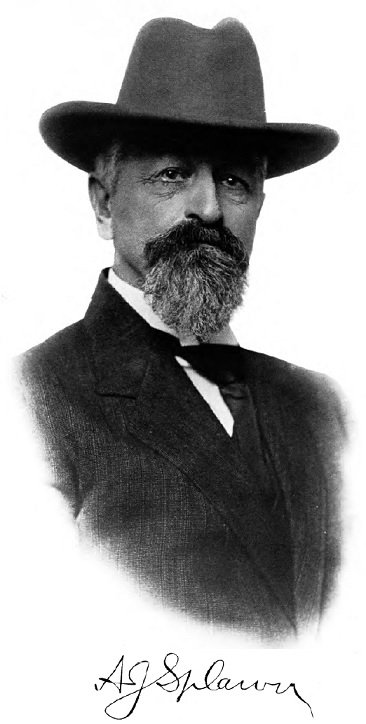
Andrew Jackson “Jack” Splawn was one of the most colorful figures in early Yakima history. A cattleman, frontier storyteller, entrepreneur, and politician, he was instantly recognizable in his trademark Stetson hat and gold‑topped walking stick.
Early Life and Frontier Years
Born in Missouri on July 30, 1845, Splawn left home at age 15 with his brother Charles and settled in a cabin north of Goldendale. There he met a young Klickitat woman named Lallooh, who would later save his life. One night she warned Splawn and another man that a group planned to kill them, delaying her own people long enough for the two to escape. Splawn never forgot her courage and later named his daughter in her honor.
Splawn soon hired on with Maj. John Thorp, helping move the Thorp family to the Yakima Valley near Moxee. He later drove cattle with Thorp from Yakima to the gold fields of British Columbia. On his first drive, Columbia Chief Moses intervened to prevent a planned attack on the men, telling the would‑be assailants that Splawn was “no cowardly dog to be killed.”
Later on that same drive, Splawn shot a man attempting to steal cattle. Okanogan Chief Tonasket initially sought retribution, but after learning the man was a thief from another band, he instead ordered warriors to escort Splawn and Thorp safely through his territory.
For the next nine years, Splawn continued driving cattle between the Yakima Valley and British Columbia, becoming a well‑known figure along the route.
Encounter with Chief Kamiakin
In 1865, while traveling through Palouse country with Willis Thorp, Splawn hired an elderly Native man as a guide to a trading post. During the journey, the man asked detailed questions about Yakima Valley settlements and leaders, saying he had once lived near the mission at Ahtanum Creek.
Only upon reaching the post did Splawn learn the guide’s identity: the trader addressed him as Kamiakin.
In his book Ka-mi-akin — The Last Hero of the Yakimas, Splawn recalled asking if he truly was the great Yakama leader. Kamiakin stood tall and replied that he was, explaining that he had fought for his homeland until his warriors were killed or scattered, then withdrew to Rock Lake.
“There is no more war. I wish to live in peace until the Great Spirit calls me to take the long trail,” Kamiakin told him.
Entrepreneur and Community Builder
Splawn expanded his ventures in 1870 when he and Ben Burch opened a trading post called Robber’s Roost, the first business in what would become Kittitas County. The name—chosen by his friend John Gillespie without consulting him—initially surprised Splawn, but the store thrived. In 1872 he sold it, along with squatter’s rights to 160 acres, to John A. Shoudy. That land would become the city of Ellensburg, named for Shoudy’s wife, Mary Ellen. A marker on West Third Street now commemorates the site.
Returning to cattle, Splawn introduced Hereford stock to the Pacific Northwest in the 1880s. He also helped launch the region’s first fruit packing house, contributing to the Valley’s emerging agricultural economy.
Political Career and Civic Leadership
By the early 1900s, Splawn was living in Cowiche and entering public life. He served in the Washington State Senate from 1903 to 1905 and ran for governor the following year on the Democratic ticket.
In 1907 he joined other Yakima businessmen to establish the Yakima Valley Transportation Company, which operated the city’s trolley system. As company president, Splawn personally operated the controls on the trolley’s inaugural run on December 24, 1907.
In 1911 he became the first mayor of North Yakima under the new commission form of government. During his 1911–1915 administration, he shut down opium dens and removed prostitution from the city center. He later served a year as police chief.
Final Years
Andrew Jackson Splawn died on March 2, 1917, reportedly from a disease contracted from a parrot in a pet store. He is buried in Tahoma Cemetery.
If you want, I can also format this into a two‑column layout, timeline, shortened museum‑style panel, or SEO‑optimized webpage section depending on how you plan to use